
News
Piano Chain Switch Selection Guide for Appliance Control Panels
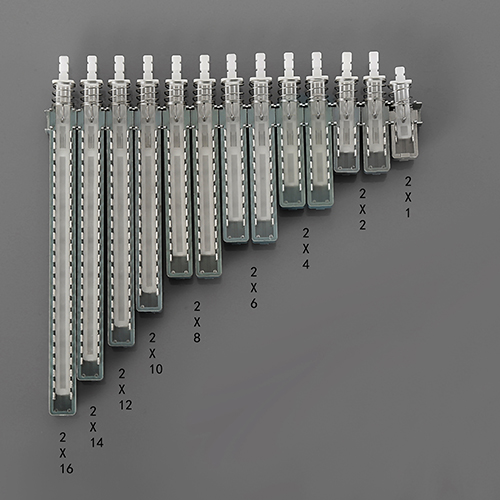
What a piano chain switch is, and where it fits
A piano chain switch is a multi-position switch whose actuators sit in a row like piano keys and are mechanically linked so that pressing one key releases the others. The defining feature is the interlock: only one circuit position stays engaged at a time. That behavior separates it from a bank of independent pushbuttons, where several circuits can be live at once.
In appliance control panels, this interlock maps directly onto mutually exclusive functions. A range hood with low, medium, and high fan speeds plus a lamp is a typical case: the fan speeds should not run simultaneously, while the lamp may be a separate circuit. Before specifying, confirm whether the lamp position is part of the interlock chain or an independent circuit, because that single question changes the switch architecture.
Zijin Electronics lists the KAN-22 under its Piano Chain Switches series for appliance controls and electronic control panels. The catalog entry confirms the series and model designation; it does not publish contact ratings, travel, or electrical life, so those values must be obtained from the supplier's datasheet or test report before design freeze.
How the interlock mechanism affects your panel design
Actuator travel and keycap stack-up
The interlock is built from a sliding or rocking release bar that clears the engaged key when another key is pressed. That mechanism consumes travel. The usable stroke at the keycap is the switch's internal travel minus the portion taken up by the keycap, panel thickness, and any bezel. If the panel is thick or the keycap has a deep skirt, the remaining stroke may be too short to reliably release the previous position.
Get three numbers from the supplier before drawing the panel cutout: total actuator travel, the actuation point, and the release point. Then measure your keycap and panel stack-up against them. A switch that actuates at 60 percent of travel but releases only near the end of the return stroke will feel vague and may not drop out cleanly.
Mounting and alignment
Multi-position switches are long relative to their width, so panel flatness and cutout tolerance matter more than with a single button. A warped front panel can bind the release bar. Ask for the recommended panel thickness range and the cutout drawing, and check that the switch body is supported along its length rather than only at the ends.
Force and feel
Operating force per key should be consistent across positions. Uneven force usually signals that one key is rubbing on the release bar or that the panel cutout is misaligned. If the application is operated with wet or greasy hands, a heavier actuation force reduces accidental presses but increases fatigue; this is a trade-off to test with real users, not to decide from a datasheet alone.
Electrical and environmental requirements to pin down
Contact rating is the first specification buyers ask for and the one most often copied incorrectly from a similar model. For each candidate switch, record the rated voltage and current, the load type (resistive, inductive motor, or lamp inrush), and the number of poles and throws. A fan motor presents an inductive load with inrush current; a lamp circuit can draw a surge at cold filament. Both are harsher than a resistive rating implies.
- Load type: state whether each position switches a motor, a lamp, or a control signal, and at what voltage and current.
- Poles and throws: confirm how many independent circuits the switch can carry, especially if the lamp is separate from the fan chain.
- Termination: specify tab width, PCB pin layout, or wire harness connector so the switch matches your assembly method.
- Environment: note ambient temperature near the hood or appliance, humidity, steam exposure, and cleaning chemicals, then ask the supplier which of these the switch is rated for.
- Cycle life: request the electrical and mechanical life figures at your actual load, not a generic number.
Where the supplier has not published a rating for your specific load, treat the gap as an open item. Do not assume a switch rated for a resistive load will survive a motor circuit without confirmation.
Piano chain, range hood, and direct key switches compared
The three switch families overlap in appearance but solve different problems. The table below frames the evaluation questions rather than asserting specifications, since ratings vary by model.
| Factor | Piano chain switch | Range hood switch | Direct key switch |
|---|---|---|---|
| Core behavior | Interlocked row; one position engaged at a time | Panel switch configured for hood functions; may or may not be interlocked | Single actuator, independent action per key |
| Typical panel role | Mutually exclusive modes such as fan speeds | Fan, lamp, and power control on a hood fascia | Individual functions, keypads, or discrete buttons |
| Key question for the buyer | Is the lamp inside or outside the interlock? | Which circuits are motor loads, and what inrush applies? | How many keys, and are simultaneous presses allowed? |
| Keycap dependency | High; stroke and skirt depth affect release | High; cosmetic and tactile requirements drive tooling | High; legends and backlighting often specified |
| Main failure risk | Binding release bar, incomplete drop-out | Contact wear from motor inrush | Independent contacts, no interlock protection |
Zijin Electronics lists range hood switch models KDC-A08 and KDC-A08-14 alongside the KAN-22 piano chain series, all described for appliance controls and electronic control panels. The catalog does not state whether the KDC models are interlocked, so verify that directly if your design depends on it.
Keycaps: the part that decides perceived quality
Buyers judge an appliance panel by its keycaps long before they read a datasheet. Keycap material, legend method, and fit to the actuator determine both feel and durability.
- Material: common options include ABS and polycarbonate-type plastics; the choice affects scratch resistance, chemical resistance, and how legends wear.
- Legend method: printed, laser-etched, or double-shot legends differ in wear resistance. Ask how the legend survives repeated cleaning with household agents.
- Fit: the keycap must seat on the actuator without play that shortens effective stroke, and without interference that binds the release bar.
- Backlighting: if illuminated, confirm light bleed between adjacent keys, which is more visible on a closely spaced piano row.
Request keycap samples assembled on the actual switch before approving tooling. A keycap that looks correct in isolation can still change the release feel once mounted.
Failure modes and how to screen for them
Most field problems with interlocked switch rows fall into a few patterns. Knowing them shapes your incoming inspection and your questions to the supplier.
- Failure to release. The previous position stays engaged after a new key is pressed. Causes include insufficient stroke, a binding release bar, or a warped panel. Screen by cycling every position in sequence on a mounted sample.
- Contact chatter or intermittent operation. Often linked to contact wear under inductive loads or to loose terminals. Screen with a continuity test while cycling under load where possible.
- Keycap detachment or wobble. Usually a fit or retention issue between keycap and actuator. Screen by pull-testing keycaps on a sample batch.
- Cosmetic wear. Legends fade or surfaces scratch under cleaning. Screen by cleaning a sample with the agents your customers actually use, following the supplier's guidance.
These checks are straightforward to run on samples and catch most issues before volume production. They do not replace the supplier's own test data, which you should still request for the specific model and load.
What to put in a request for quotation
A precise RFQ shortens the selection cycle. Include the following, and mark anything unknown as an open question rather than guessing.
- Number of positions and which circuits are interlocked versus independent.
- Voltage, current, and load type per position, including motor or lamp inrush.
- Panel thickness, cutout drawing, and keycap stack-up dimensions.
- Required termination style and assembly method.
- Environmental exposure: temperature, humidity, steam, cleaning agents.
- Target cycle life and any applicable safety or compliance requirements for your market.
- Sample quantity and the inspection criteria you will apply on receipt.
Ask the supplier to confirm which specifications are catalogued and which are project-specific. Zijin Electronics states model selection support for its switch series, which is the point to raise questions about ratings, travel, and life that the catalog does not publish.
Decision rule for choosing between the families
Use a piano chain switch when the panel must enforce mutual exclusivity mechanically, such as fan speed selection, and when the user benefits from a visible, tactile indication of the active mode. Choose a direct key switch arrangement when functions are independent and simultaneous operation is acceptable or required. A range hood switch is the right frame when the panel is purpose-built for hood functions and the supplier's model is designed around that fascia layout.
If the interlock is a safety or functional requirement rather than a convenience, confirm it with a physical sample under your panel conditions. Catalog descriptions alone are not sufficient evidence of interlock behavior.